

Preview the application questions:
San Bernardino County encompasses a diverse landscape of environments and communities. How does your experience living and working in this region influence your artistic practice? Please share specific examples of how the area's cultural heritage, natural environment, or community dynamics have shaped your creative perspective and what aspects of the region you hope to explore further through your residency work.
Describe your primary artistic focus and how you envision utilizing the studio space to develop your practice. What specific projects or series do you plan to undertake during the residency? How will your work respond to or transform the physical studio environment, and how might the space influence your creative process and artistic outcomes? Please explain how you would adapt your working methods to maximize the advantages of the space while addressing any limitations. How might these spatial considerations influence your choice of materials and scale of work?
Our residency program requires artists to maintain active studio practices with regular weekly engagement. What is your proposed schedule for studio time? How will you balance this commitment with your existing professional and personal responsibilities? Please describe your typical working patterns and how you plan to structure your time in the studio to ensure consistent progress on your projects.
This residency aims to foster both individual artistic growth and community engagement. What specific technical skills, conceptual investigations, or bodies of work do you hope to develop during your time here? How do you envision sharing your creative process and outcomes with fellow artists and the broader community? Please detail your preferred tools, materials, and equipment needs, including any new techniques or media you wish to explore. Additionally, explain how you plan to make your work accessible and engaging to studio visitors while maintaining your creative focus.
How do you envision transforming the studio space for your end-of-residency reception? Please describe your installation plan, including how visitors will experience your work, your use of the studio's physical features (windows, walls, etc), and any interactive elements. Consider both the practical requirements and how your installation choices will reflect the artistic themes developed during your residency.
Lounge Residency has moved to CASA Pitzer in Downtown Ontario at 200 S. Euclid Avenue, Ontario, CA.
Residencies will take place from February - May, June - August, and September - December.
Amenities Include:
Workspace | Exhibition Space | Free WiFi | Shared Restroom | Heating and A/C
To apply, click the “Apply Now” button. For more information, please email us at hello@curiouspublishing.org.
View our former space located in San Bernardino from February - July 2025.


About Us

Rebecca Ustrell, Founder of Curious Publishing, Co-Director of Lounge Residency
Rebecca Ustrell is an artist, educator, and documentarian in the Inland Empire of Southern California. In 2018 after a long period of creative burn-out, she leaned into her life-long passion for printed ephemera and founded Curious Publishing, a non-profit artbook publishing company which focuses on archiving stories and creating wealth by supporting queer, BIPOC, and femme creatives through small-run artbooks, zines, and print collections. In 2023-2024, she was the Activist Artist in Residence for the Community Engagement Center at Pitzer College, and is currently the Event Coordinator for Museum Arts & Culture at the City of Ontario.

Nicholas Aceves, Graphic Designer of Curious Publishing, Co-Director of Lounge Residency
Hi! I'm Nicholas Aceves (ah-seh-ves), a graphic designer and artist from Highland, California. My specialty lies in crafting bespoke brand identities and illustrations that enable you to communicate your distinctive narratives and differentiate yourself from others.
2025 Artists in Residence:
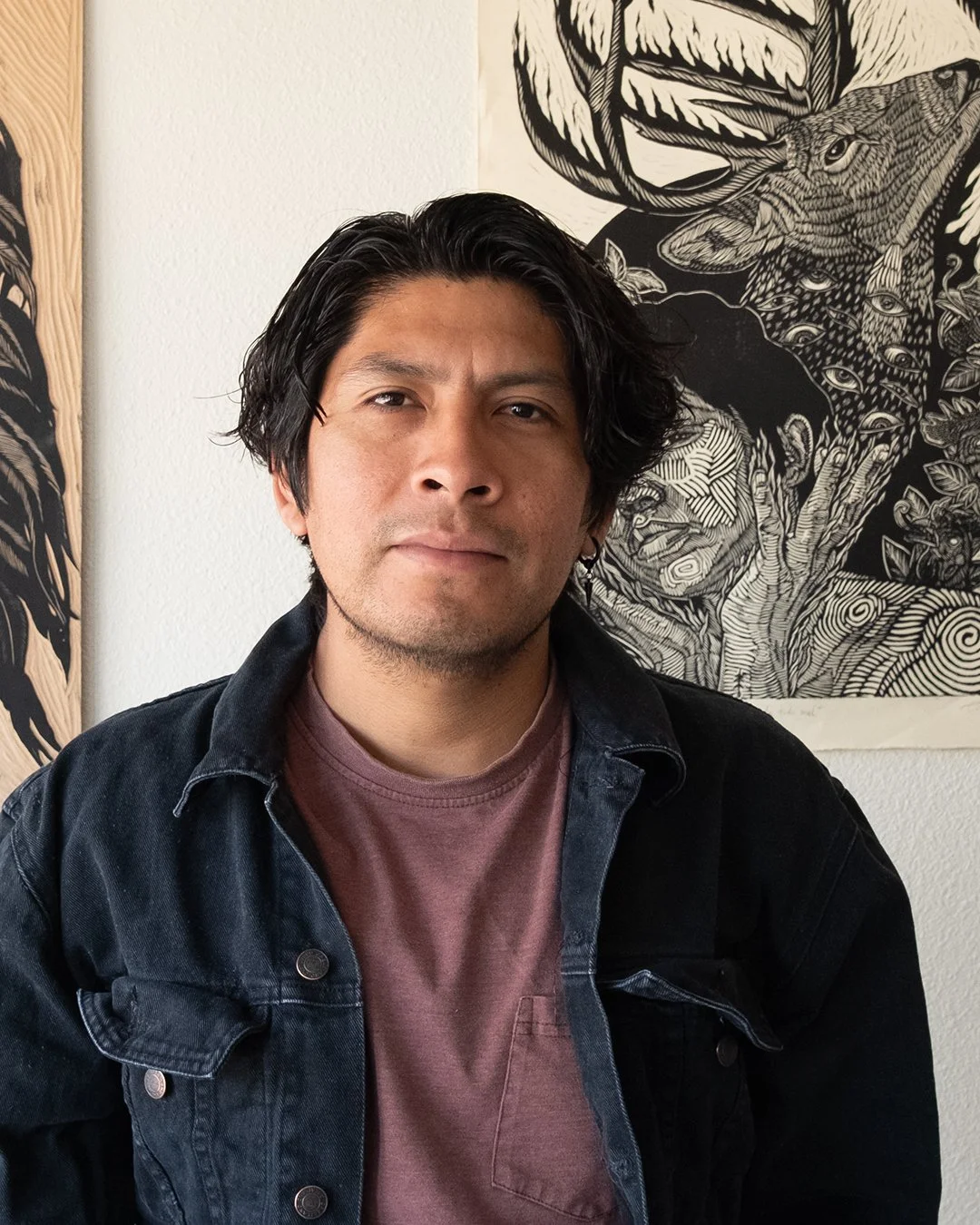
Cesar Garcia @zuaycreatex
Oaxacan-born craftsman based in San Bernardino specializing in printmaking techniques such as xylography, pyrography, stencil, and airbrushing. Cesar’s exhibition “Salpicado en Tinta” (Splattered in Ink) showcased his evolution as a printmaker while blending traditional Oaxacan methods with his Zapotec heritage to explore themes of activism and social justice.
Through bold imagery and layered techniques, Cesar’s work reflected the struggles and resilience of marginalized communities, honoring ancestral knowledge while addressing contemporary issues. During his residency, he led five workshops that invited participants to discover how printmaking serves as a powerful tool for expressing collective consciousness, fostering dialogue, and amplifying voices that are often left unheard. His practice bridges craft and activism, proving that art can be both beautiful and transformative.
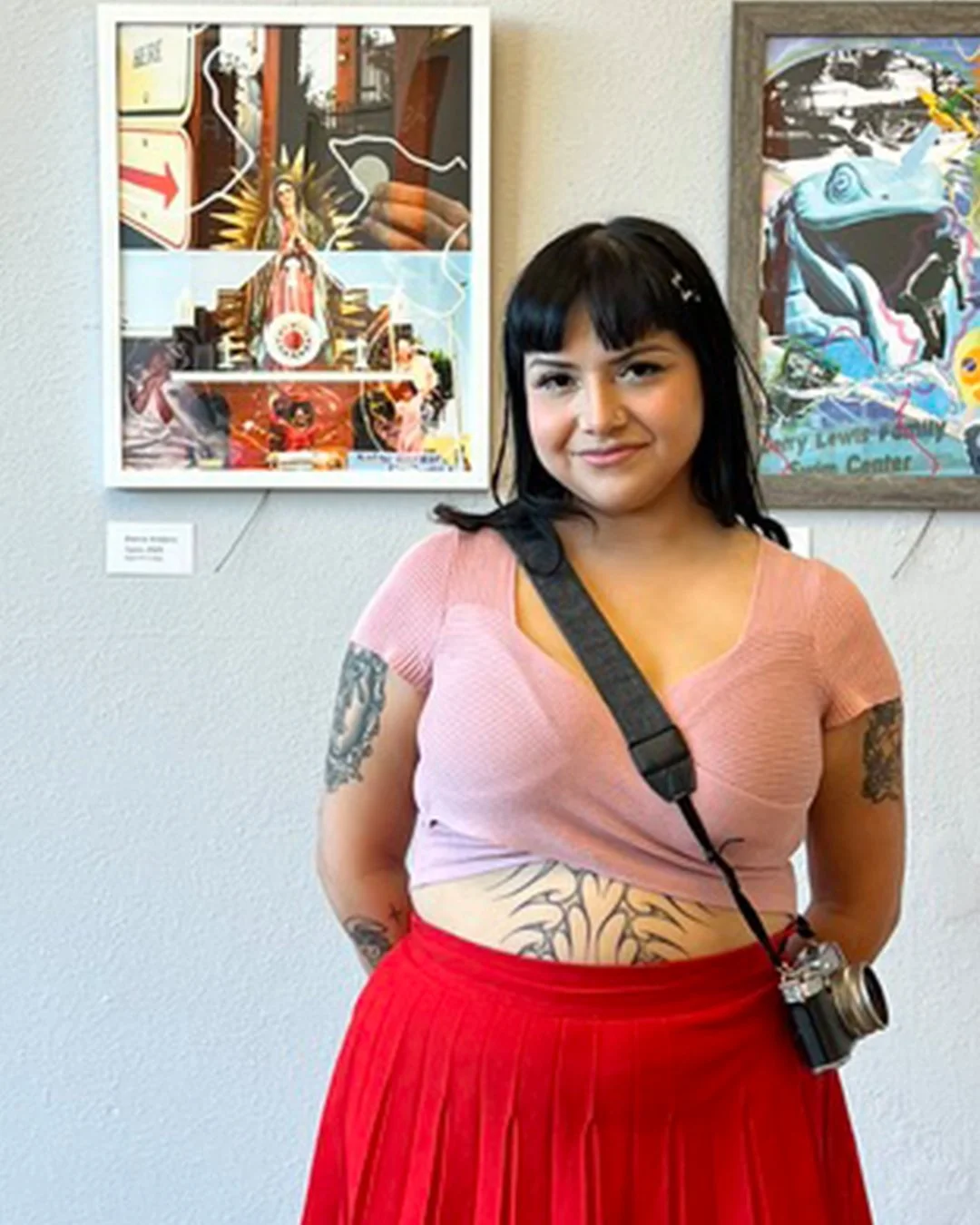
Bianca Alina @adorabeing
Exploring vibrant, dreamlike digital collages that take you on a journey of nostalgia and discovery, Bianca’s work captivates our senses by blending memory with imagination.
Her exhibition “My Powers of Recollection: A San Bernardino Memory Project” wove childhood photographs and digital collages together commemorate nostalgic memories and historical landmarks throughout San Bernardino, transforming personal and collective histories into visual poetry. Bianca honored the city’s past while inviting viewers to reconnect with their own sense of place and belonging. During her residency, she led workshops where participants crafted their own nostalgic journeys using collage techniques—creating custom pins and tote bags that became wearable keepsakes of memory and meaning.
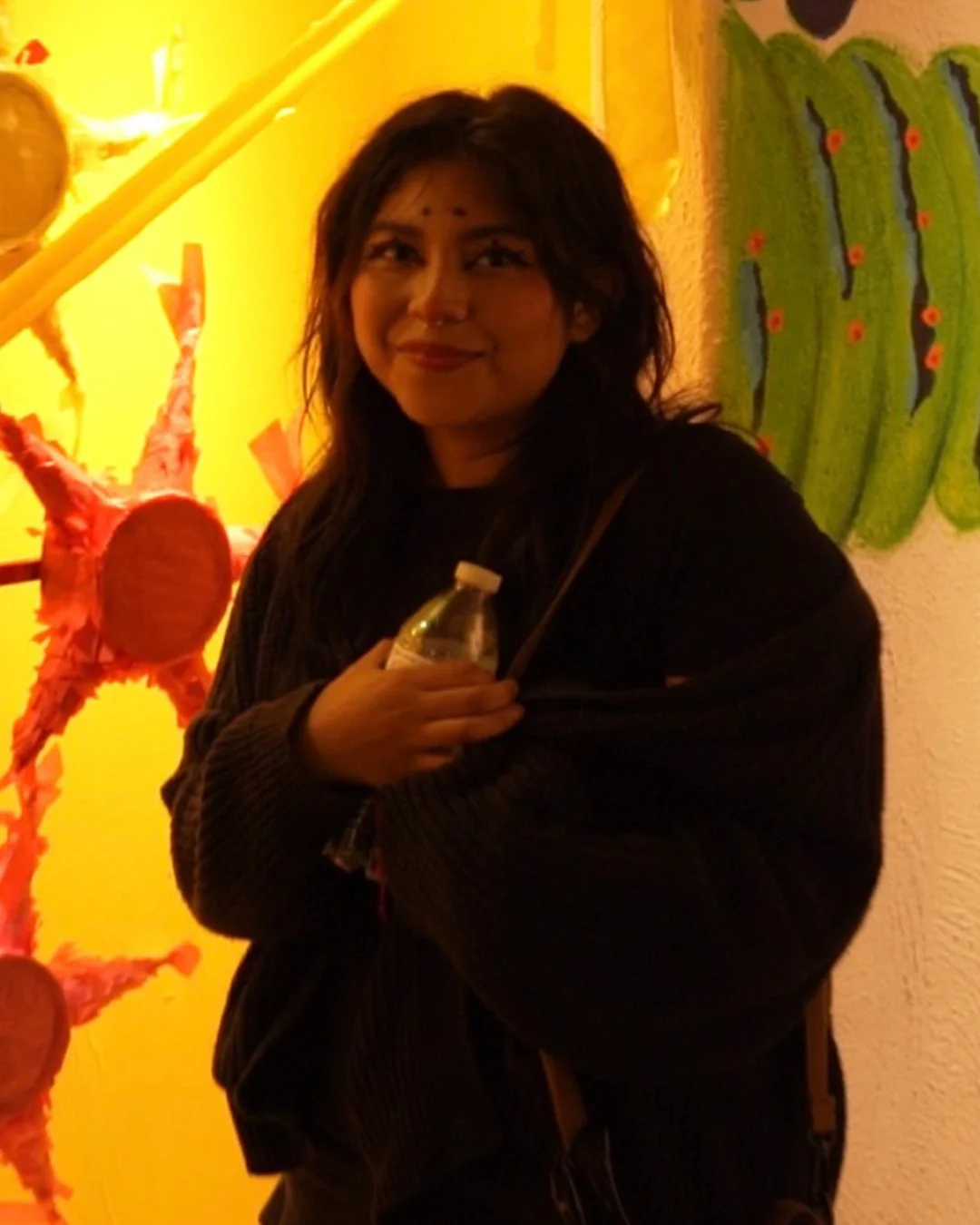
Gabriela Diaz @evie.bites
Gabriela’s closing exhibition “Tierra de Hormigas” drew parallels between the complex, female-based society of worker ants and the women of Zicapa (translating to “Land of Ants”), her parents’ village in Guerrero, Mexico, showcasing their resilience and vital role in building safe spaces to support and empower each other.
Through large-scale paintings, Gabriela depicted the warm, nurturing environments these women create and sustain. Vinyl wall decals of ants cleverly bridged the physical space between artworks, symbolizing the collective journey and interconnectedness of Zicapa’s women as they work together. Much like ants, Zicapa’s women forge community, overcome distance, and create enduring spaces of refuge and strength. The exhibition honored the quiet, yet powerful labor of women who, through collaboration and determination, build foundations for future generations.